The best cat litter in India is the one your cat accepts and you can keep clean consistently. Start with the cleaning method: clumping bentonite and many tofu litters let you scoop out urine clumps; non-clumping pine pellets require sawdust removal; non-clumping silica crystals absorb urine until the litter needs replacing. Then compare texture, tracking, storage and the cost of actual use.
By GIGO. Updated 25 October 2026. GIGO sells bentonite and pine litter. This is a brand-authored buying guide, not an independent brand ranking or a laboratory comparison. Prices below were checked on GIGO product pages on this date.
Which type of cat litter should you choose?
| Litter type | Cleaning routine | Consider it if... | Trade-off to check |
|---|---|---|---|
| Clumping bentonite | Scoop urine clumps and solid waste; top up clean litter. | You prefer a granular texture and daily spot-cleaning in a standard tray. | Granules can track; compare dust and clump behaviour for the specific product. |
| Non-clumping pine pellets | Remove solid waste and sift or remove damp sawdust. | You prefer larger wood pellets and can maintain a pellet-compatible tray. | Some cats need time to accept pellets; sawdust removal differs from clump scooping. |
| Clumping tofu litter | Scoop clumps and solid waste according to the pack instructions. | You want a plant-based clumping option. | Ingredients, pellet size, price and storage instructions vary by brand; check the actual formulation. |
| Non-clumping silica crystals | Remove solids; stir and replace crystals as the manufacturer directs. | You prefer an absorbent crystal format rather than removing urine clumps. | Urine remains absorbed in the tray until replacement; check saturation and litter-box compatibility. |
These are format differences, not a claim that every product of one type performs better than another. Check the label: some products are blends or use a different clumping system. For examples of manufacturer instructions, see pidan’s tofu litter information and PetSafe’s crystal litter guidance.
A quick buying checklist for Indian homes
- Start with your cat: keep a familiar texture available during a switch. A lower price is not useful if your cat avoids the tray.
- Match the tray: check pellet size, scoop openings and any automatic litter-box compatibility requirements before buying.
- Check dust and tracking separately: airborne dust when pouring and litter carried onto the floor are different problems. Look for a clear demonstration of the actual product rather than an unexplained “zero dust” claim.
- Plan storage: reseal unused litter and keep it dry, especially during the monsoon. Buy a large pack only when you have suitable storage and know your cat accepts it.
- Compare ongoing cost: use price per kg or litre within the same format, then measure how much you actually use. Kilograms and litres are not interchangeable.
For compact flats, read our small-apartment litter guide. If you already know the format you want, shop GIGO cat litter online.
Bentonite vs pine cat litter: side-by-side comparison
| Feature | Bentonite clumping litter | Pine wood pellet litter |
|---|---|---|
| How it works | Forms scoopable clumps after contact with moisture | Pellets absorb moisture and gradually break into sawdust |
| Daily cleaning | Scoop clumps and solid waste | Remove solid waste and separate damp sawdust according to tray type |
| Odour management | Fast removal of clumps helps control odour | Pine naturally has a woody scent; regular sawdust removal remains important |
| Tracking | Fine granules may travel outside the tray | Larger pellets generally track less |
| Best tray type | Standard or covered litter box | Standard tray or pellet-compatible sifting tray |
| Best suited to | Cat parents who value quick scooping | Homes prioritising pellets and reduced tracking |
What is bentonite cat litter?
Bentonite is a mineral clay that expands and binds when wet. In cat litter, this creates compact clumps that can be removed without replacing the entire tray each time. A good clumping routine helps keep the remaining litter usable and the box more comfortable for the cat.
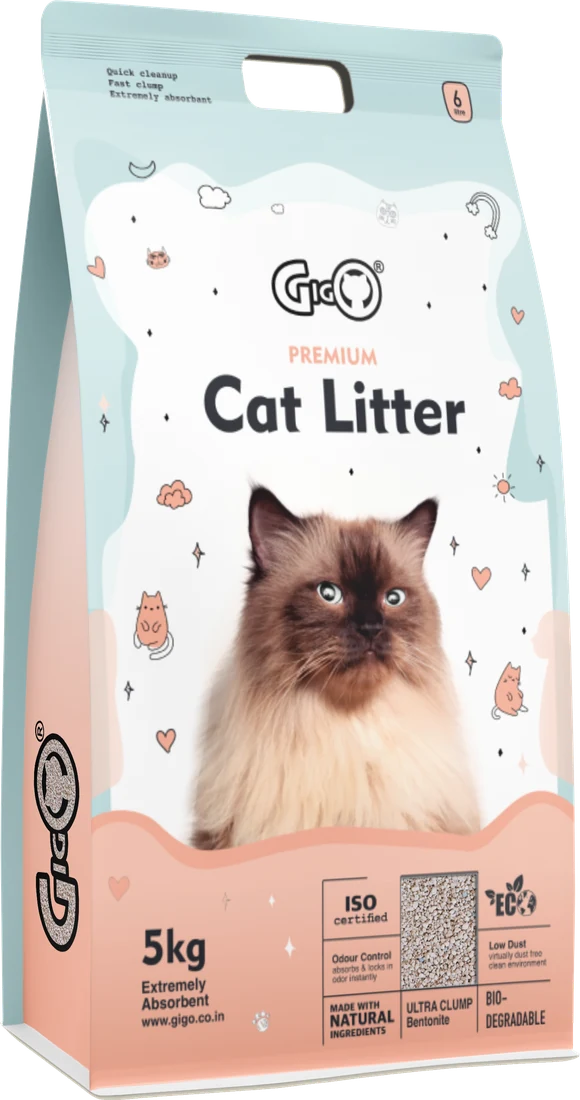
GIGO’s Activated Charcoal Bentonite Clumping Cat Litter is a 5 kg option designed for standard litter boxes. The activated charcoal component is included for odour management. Always maintain sufficient litter depth and scoop regularly for consistent performance.
Advantages of bentonite litter
- Forms visible, scoopable clumps
- Convenient for daily spot-cleaning
- Works with most standard litter trays
- Useful in multi-cat homes where frequent cleaning is required
Points to consider
- Fine particles can track outside the litter box
- Pour gently and keep the tray ventilated
- Do not flush used litter; dispose of it according to local waste rules
What is pine wood cat litter?
Pine litter uses compressed wood pellets. The pellets absorb moisture and soften into sawdust. Instead of removing a clay clump, the cleaning method focuses on separating or removing damp sawdust and keeping dry pellets in use.
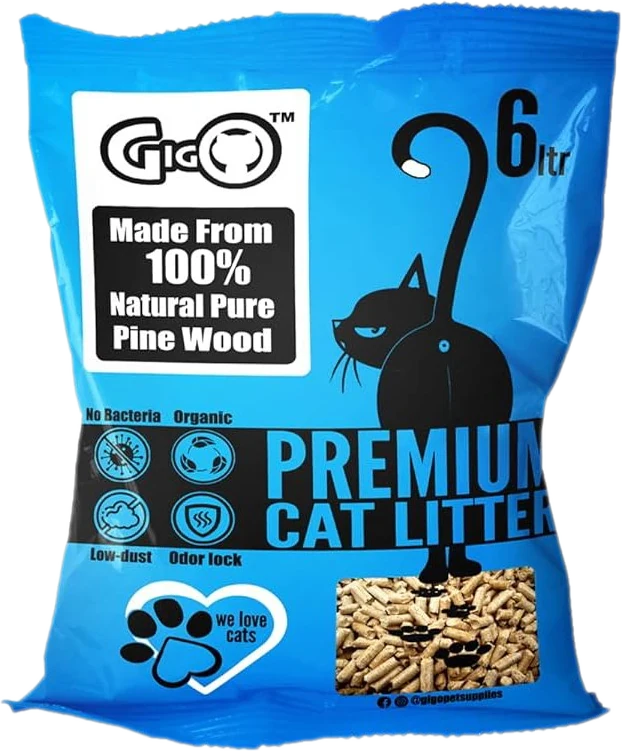
GIGO’s Pine Wood Cat Litter Pellets come in a 6 L pack. A sifting tray can make pellet maintenance easier, although a regular tray can also be used with a suitable cleaning routine.
Advantages of pine litter
- Larger pellets usually spread less around the home
- Lightweight format
- Natural woody scent
- Can work particularly well with a pellet-compatible sifting tray
Points to consider
- Some cats need time to accept the pellet texture
- The cleaning technique differs from clumping litter
- Damp sawdust should be removed frequently to keep the tray fresh
Cat litter prices in India: GIGO pack and unit costs
Current selling prices checked on 25 October 2026. Offers can change; use the linked product page and checkout for the final price, availability and delivery charges.
| GIGO option | Pack | Selling price | Unit cost |
|---|---|---|---|
| Activated charcoal bentonite litter | 5 kg | ₹620 | ₹124/kg |
| Bentonite value pack | 4 × 5 kg (20 kg total) | ₹2,232 | ₹111.60/kg |
| Pine wood litter pellets | 6 L | ₹380 | About ₹63.33/L |
At these prices, four individual 5 kg bentonite bags cost ₹2,480. The value pack saves ₹248 on the product price, or 10%. Start with one bag if your cat has not tried it. The pine price per litre cannot be directly compared with bentonite’s price per kilogram.
How much will cat litter cost per month?
Monthly litter cost = the amount used in a month × its unit price. Include top-ups and litter discarded during full changes. Track consumption over a complete cleaning cycle; the first fill of a new tray can make the first month different from later months.
For illustration only, using 5 kg of bentonite in a month would cost ₹620 at the single-pack rate or ₹558 at the 20 kg pack’s unit rate. This is a calculation, not a tested consumption estimate. Cat count, tray size, depth and cleaning habits determine actual usage. Shipping and any checkout fees are additional where applicable.
How long does 5 kg of cat litter last?
There is no reliable fixed duration for every home. Record the opening date, the amount used for the first fill, top-ups and full changes. Once you know your own monthly usage, you can plan the next order. See our 5 kg bentonite litter and pack-life guide for the details.
Dispatch and delivery
On working days, GIGO orders are dispatched the same day. Orders received late at night are dispatched the next working day. Dispatch is not the delivery date; transit time and postcode serviceability vary. See the shipping policy for Sunday, public-holiday and other exceptions.
How much litter should you put in the box?
Start with the depth recommended on the product pack and adjust for your cat’s digging style. For clumping litter, enough depth is needed to allow urine to form a clump before reaching the base of the tray. For pine pellets, avoid overfilling because the pellets expand and break down during use.
How often should a litter box be cleaned?
Remove solid waste promptly and inspect the tray at least once daily. Scoop bentonite clumps as they form. With pine pellets, remove damp sawdust and replenish clean pellets as needed. Wash the empty tray periodically with a mild, cat-safe cleaning method and dry it completely before refilling.
How to change your cat from one litter to another
- Place a small quantity of the new litter alongside the familiar litter.
- Increase the new proportion gradually over several days.
- Keep the box location and cleaning schedule consistent.
- If your cat avoids the box, slow the transition and provide a second tray temporarily.
Never force a sudden change when a cat is already reluctant to use the litter box. Persistent avoidance, straining or changes in urination can require veterinary attention.
Choosing litter for Indian apartments and humid weather
In compact apartments, frequent removal of waste matters more than perfume. Keep the box in a ventilated, accessible place away from food and water. During humid weather, store unused litter sealed and dry, and avoid leaving damp litter in the tray. A litter mat outside the box can help catch granules or pellets.
Can you buy cat litter online across India?
GIGO supplies cat-care products online across India, including Mumbai, Delhi NCR and Noida, Bengaluru, Hyderabad, Chennai, Indore and other serviceable locations. Delivery availability and timing depend on the entered postcode. Choose the product for its litter type and your cat’s needs rather than creating different litter routines for each city.
Frequently asked questions
Is bentonite or pine litter better for odour?
Both can manage odour when maintained correctly. Bentonite allows urine clumps to be removed quickly, while pine absorbs moisture into pellets that become sawdust. Daily cleaning and sufficient litter depth have a major effect on odour.
Which cat litter tracks less?
Pine pellets generally track less because they are larger than fine bentonite granules. A litter mat and a high-sided box can reduce tracking for either type.
Is bentonite litter suitable for kittens?
Age, chewing behaviour and individual health matter. Ask your veterinarian which litter type is appropriate for a young kitten, and supervise any transition.
Can cat litter be flushed?
Do not flush cat litter unless both the product instructions and local plumbing rules explicitly permit it. Bag used litter and follow local waste-disposal requirements.
How many litter boxes should a home have?
A commonly used starting point is one box per cat plus one additional box, distributed in accessible locations. Individual cats and homes may need a different arrangement.
Final recommendation
Choose bentonite clumping litter for fast scooping and a familiar granular texture. Choose pine wood pellets for a larger-pellet format with typically lower tracking. Whichever you select, a gradual transition and consistent cleaning routine are the most important parts of litter-box success.