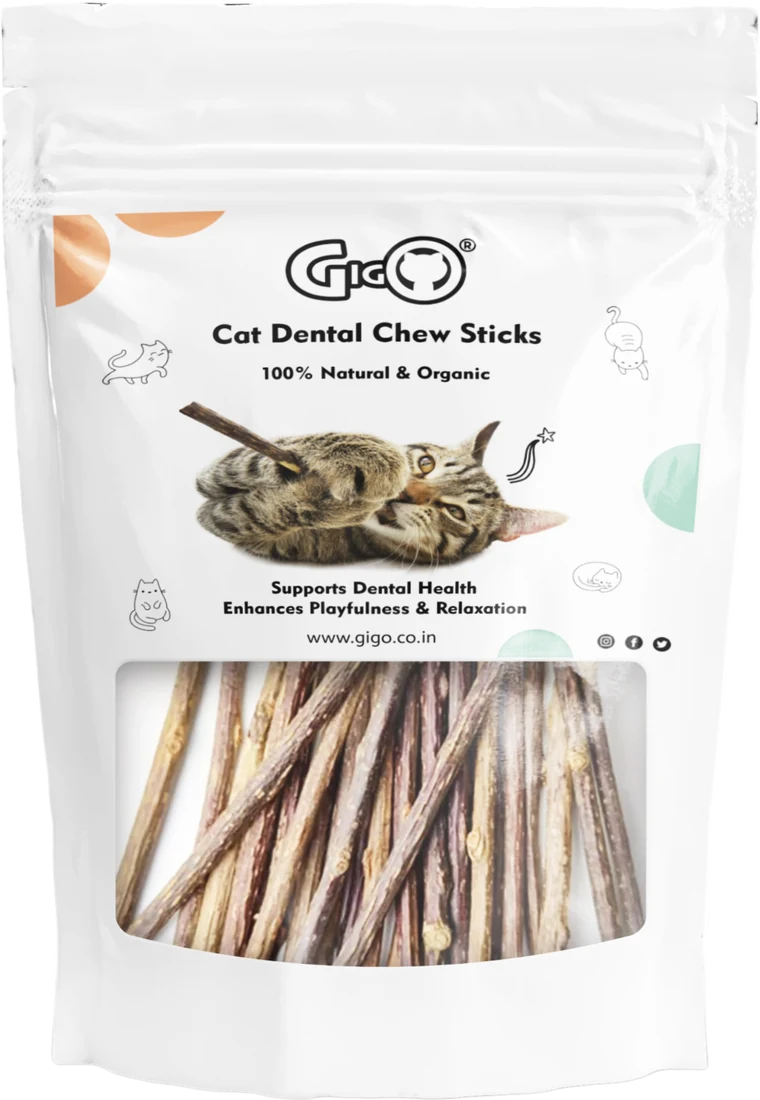
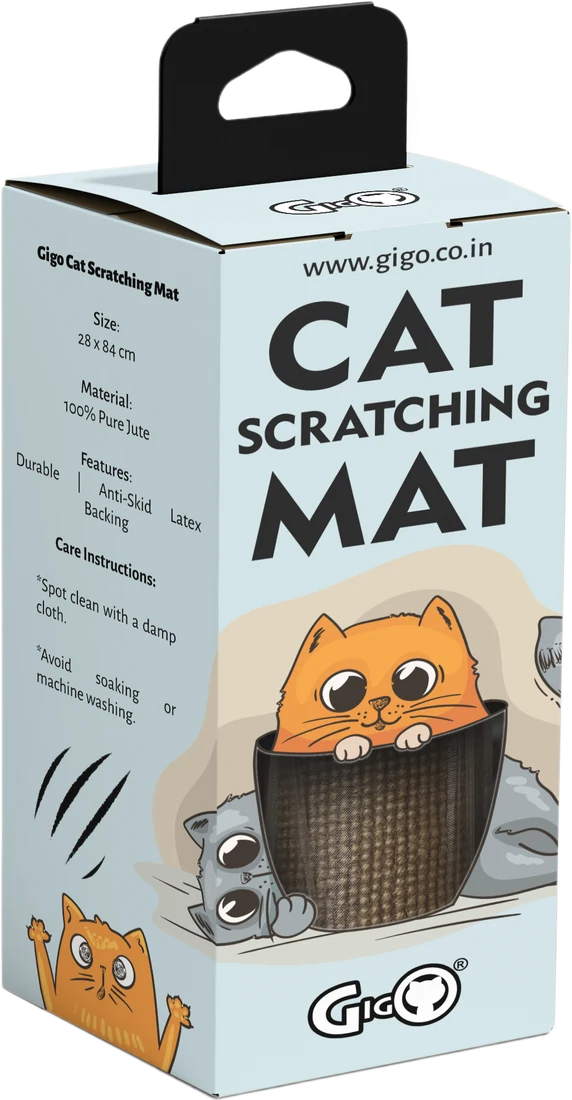
TL;DR: Catnip is a safe, non-addictive enrichment for cats, but not all cats respond — sensitivity is inherited. Give a small pinch (about a quarter teaspoon) two or three times a week, offered on a toy or scratching mat rather than left out in a bowl. Store it sealed, out of heat and sunlight; Indian humidity is what kills potency fastest.
What is catnip and how does it work?
Catnip is a herb from the mint family. Its active compound is released as a volatile oil from the dried leaves, and cats detect it through the scent, not the taste — which is why sniffing matters more than eating. When a responsive cat smells it, they may sniff intensely, lick, rub their face, roll, or become briefly playful. The reaction usually lasts a few minutes, then fades and the cat loses interest for a while. It is not a drug high in the way people imagine: it's a short, harmless enrichment response.
Do all cats react to catnip?
No, and that's normal. The sensitivity is inherited, so a meaningful share of cats simply don't carry it and will never react, no matter the quality or quantity. Very young kittens also generally don't respond — the response typically develops as they mature. If your cat ignores catnip entirely, there is nothing wrong with them. We cover this in detail in Does Catnip Actually Work on Cats?
How much catnip should I give my cat?
A small pinch — roughly a quarter teaspoon — is plenty. More does not make the reaction stronger, and offering it in a bowl to eat isn't the right method. Tip the pinch onto a toy, a scratching mat, or the floor and let your cat investigate by scent. If you find loose catnip scattered and uneaten, you've used more than needed; sweep it up and use less next time.
How often is too often?
Use catnip two to three times a week, not daily. Cats that get it constantly tend to stop responding in the short term, so spreading sessions out keeps the reaction fresh and makes catnip a more useful tool when you actually want it — like persuading a nervous cat onto a new scratching mat or into a carrier.
Which form is best — dried leaf, spray or toys?
| Form | Best for | Notes |
|---|---|---|
| Dried leaf / loose catnip | Versatile use, mats, toys, training | Most potent per rupee; you control the amount |
| Catnip spray | Refreshing mats, posts, carriers quickly | Convenient, but potency fades faster |
| Pre-filled toys / kickers | Cats who like to kick and wrestle | Refill or replace once the response fades |
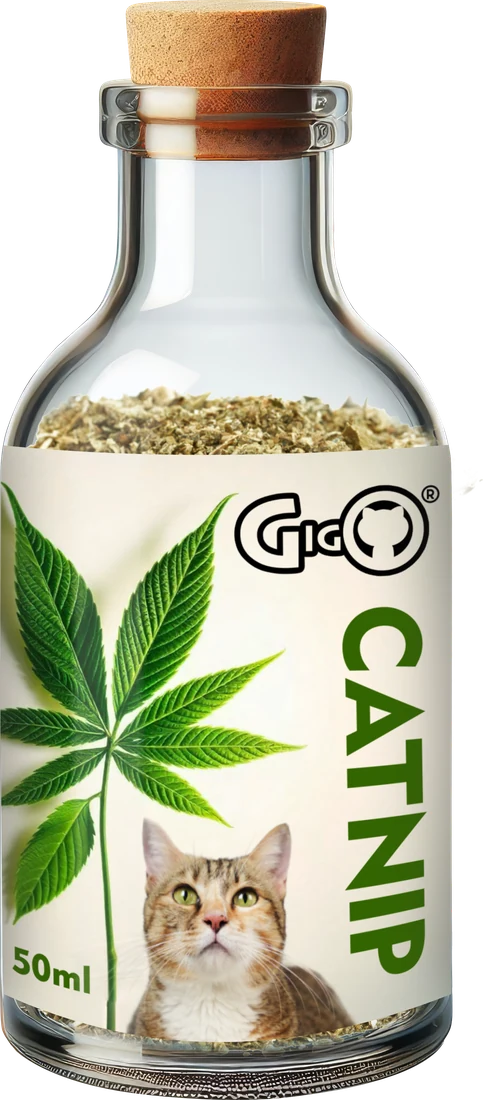
For most Indian homes, one bottle of dried leaf does everything. GIGO's dried Kashmiri catnip comes as a 50 ml sealed glass bottle at ₹345 — enough for many months at two or three small pinches a week.
How do I store catnip in Indian humidity?
Potency comes from volatile oils, and heat, light and moisture destroy them:
- Keep it in its sealed glass bottle, lid closed between uses
- Store it in a cool, dark cupboard — not on a sunny windowsill, not above the stove
- Don't refrigerate it — condensation inside the bottle from repeated temperature changes degrades it faster
- If your cat stops responding, the catnip has likely gone stale: replace the bottle rather than compensating with bigger pinches
Is catnip safe for cats?
Used in moderation, catnip is widely considered safe and non-addictive for cats. A few sensible boundaries:
- Supervise sessions, and keep the bottle out of reach so your cat can't raid it
- Don't let them eat large quantities — a big serving can cause mild stomach upset and vomiting
- Skip it for very young kittens, who usually don't respond yet anyway
- If your cat has a health condition or is on medication, ask your vet before adding anything new to their routine
Catnip is enrichment, not medicine. It doesn't treat anxiety or behavioural problems, and it isn't a substitute for a vet visit.
How do I use catnip to get my cat onto a scratching mat?
This is its most useful practical job. Sprinkle a pinch on a new jute scratching mat, place the mat against the furniture your cat already scratches, and let them discover it. Once they're using it, move the mat a few centimetres at a time toward where you want it. Full method in our guide on how to stop your cat scratching furniture.
What should I look for when buying catnip in India?
- Dried leaf, not just fine dust — you want visible leaf material
- A sealed container (glass is best) rather than a loose pouch that's been sitting open
- No added fillers or fragrances — plain dried catnip only
- A named origin, since freshness varies widely between suppliers
The bottom line
Catnip is one of the cheapest, safest forms of cat enrichment you can buy — you just have to use it properly: a quarter-teaspoon pinch, two or three times a week, on a toy or mat, stored sealed in a cool dark cupboard. Not every cat will respond, and that's genetics, not a bad bottle. Try GIGO's dried Kashmiri catnip alongside our dental chew sticks, or browse the full catnip & chews range. Made in India, shipped nationwide with Cash on Delivery.